
The Fallout of the Fall: Understanding Sin's Consequences in Genesis 3
The Fallout of the Fall: Understanding Sin's Consequences in Genesis 3
The story of Adam and Eve in the Garden of Eden reveals profound truths about human nature and our relationship with God. While we often focus on the act of disobedience itself, Genesis 3 shows us something equally important: the devastating consequences that follow when sin enters our lives.
What Was Life Like Before Sin?
Before the fall, life in the Garden of Eden was marked by three beautiful characteristics: life, ease, and trust. Everything God created was good, and when He created mankind, it was very good. There was abundant life flowing through creation. Work was not laborious but fulfilling. Most importantly, there was complete trust between God and humanity, and between man and woman.
Adam and Eve lived in perfect unity with their Creator and with each other. They were naked and felt no shame. This wasn't just about physical nakedness—it represented complete transparency, vulnerability, and acceptance in all their relationships.
How Does Sin Work in Our Lives?
Sin follows a predictable cycle that began in the Garden and continues in our lives today. It starts with doubt—questioning God's word or character. This leads to deception, where we begin believing lies about God or ourselves. Deception then moves to disobedience, where we act on those lies. Finally, we experience shame, causing us to hide from God and others.
This isn't just Adam and Eve's story—it's our story. We all experience this cycle when we choose to go our own way instead of trusting God's design for our lives.
What Are the Consequences of Sin?
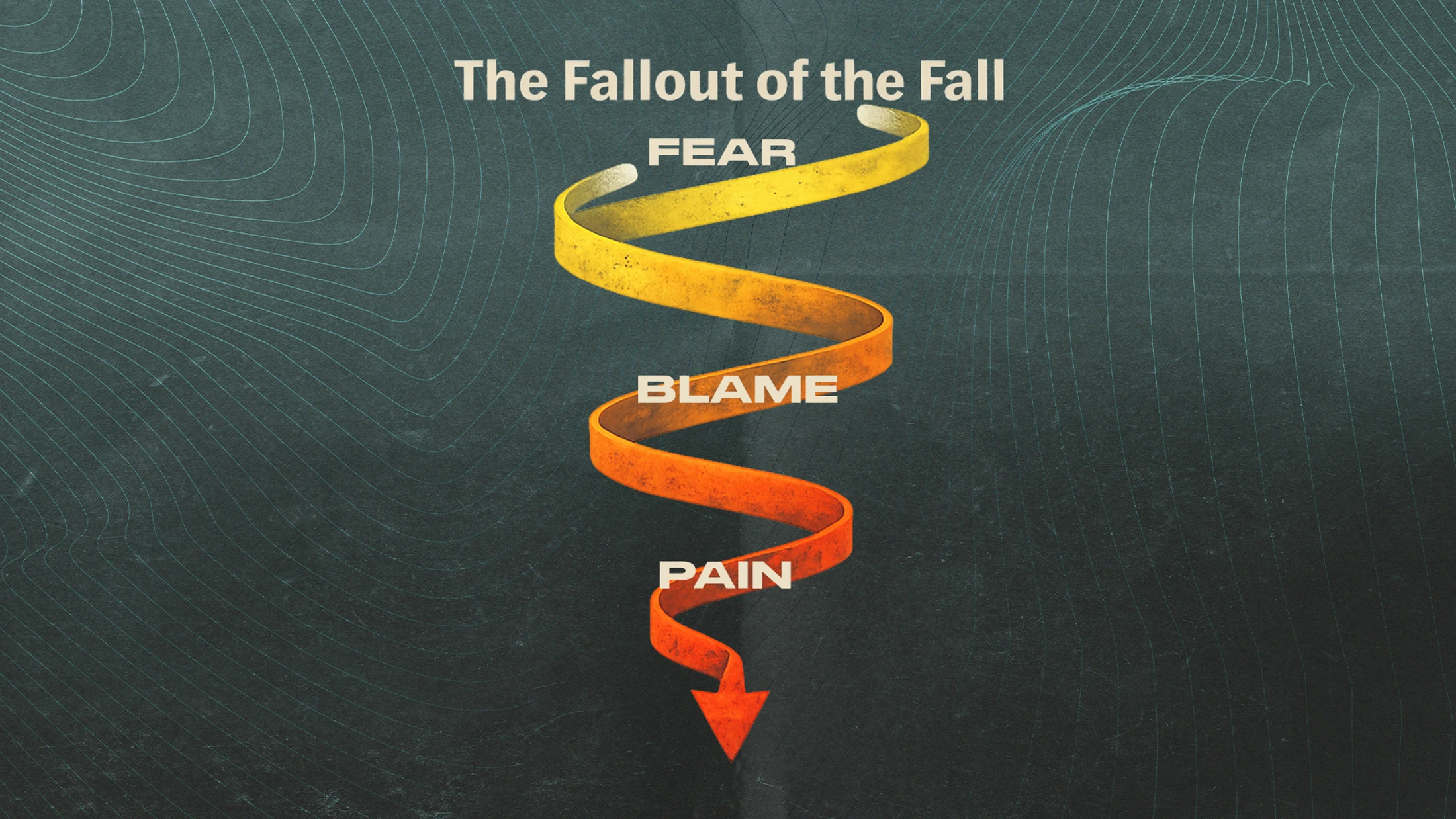
Fear Replaces Trust
The first consequence we see is fear. When God came walking in the garden as He always did, Adam and Eve hid. What was once a relationship of trust and intimacy became one of fear and hiding. Adam said, "I heard you in the garden, and I was afraid because I was naked, so I hid."
This same pattern continues today. We hide parts of ourselves from God and others because we're afraid of being truly known. We keep secrets, tell half-truths, and pretend to be something we're not, all because sin has introduced fear into our relationships.
Blame Replaces Responsibility
When confronted with his disobedience, Adam didn't take responsibility. Instead, he blamed both Eve and God: "The woman you put here with me—she gave me some fruit from the tree, and I ate it." Eve followed suit, blaming the serpent.
This pattern of blame-shifting continues in our lives today. We blame our upbringing, circumstances, other people, or even God for our choices. As long as we can make it someone else's fault, we never have to change or grow.
Pain Enters Every Aspect of Life
The consequences extended beyond relationships to every area of life. For women, there would be pain in childbearing—not just physical pain, but the emotional pain of watching children struggle and make poor choices. The perfect unity between men and women would become a battle for control.
For men, work would become toilsome. What was once easy and fulfilling would now require enormous effort, often with frustrating results. The ground would fight back with thorns and weeds.
Why Is Life So Difficult?
If you've ever wondered why life is so hard, Genesis 3 provides the answer. The ease that characterized life before sin has been replaced with dis-ease. Everything that was once working perfectly now struggles against us. Our bodies break down, our relationships require constant work, and our efforts often seem futile.
Romans 8:20-22 explains that "the creation was subjected to frustration" and "the whole creation has been groaning as in the pains of childbirth right up to the present time." We feel this groaning every day in our marriages, jobs, health, and relationships.
Is There Hope Beyond the Consequences?
In the midst of pronouncing consequences, God provided hope. He promised that the woman's offspring would one day crush the serpent's head, while the serpent would only strike his heel. This is the first glimpse of the gospel—the good news that Jesus would come to defeat sin and restore what was lost.
This promise, known as the "first gospel," reveals that even before the dust had settled from humanity's fall, God had a redemption plan in motion. Where sin brought fear, Jesus provides covering. Where sin brought blame, Jesus takes responsibility. Where sin brought pain, Jesus enters into our suffering.
How Does Jesus Restore What Was Lost?
The fall happened at the foot of a tree—the Tree of the Knowledge of Good and Evil. Thousands of years later, at the foot of another tree—the cross—God's redemption plan was completed. Jesus took our shame, wore our blame, and bore our pain.
Romans 8:1 declares, "Therefore, there is now no condemnation for those who are in Christ Jesus." First Corinthians 15:22 adds, "For as in Adam all die, so in Christ all will be made alive."
The distorted mirror of sin that makes everything look wrong will one day be made clear. We will see life as God originally intended—full of life, ease, and trust. While we won't experience this fully on this side of eternity, we can taste it now through our relationship with Jesus.
Life Application
This week, take time to honestly examine where you might be hiding from God. What parts of your life are you hoping no one sees? What conversations are you avoiding? Instead of continuing to hide in fear or shift blame to others, bring these areas to Jesus.
God is asking you the same question He asked Adam: "Where are you?" He's not asking because He doesn't know—He's asking because He wants to draw you out of hiding and into relationship with Him.
Consider these questions as you reflect on this message:
- What am I currently hiding from God or others in my life?
- Who or what do I tend to blame when I fall short or make mistakes?
- How can I take responsibility for my choices instead of shifting blame?
- In what areas of my life do I need to stop settling for the "distorted mirror" of sin and start trusting God's design?
Remember, your story doesn't end with the consequences of sin. Through Jesus, you can experience the life, ease, and trust that God originally intended for you.